

CHRISTCHURCH WORKSHOP · BOURNEMOUTH, POOLE & DORSET
Motorhome paint correction & restoration in Dorset.
Dull paintwork, swirl marks or weathered finishes? Our Christchurch workshop helps motorhome and campervan owners across Bournemouth, Poole and Dorset plan the right treatment. We assess the material and condition before recommending a suitable restoration approach.
Estimates based on your vehicle’s size, condition and the work required.
The right treatment starts with the surface.
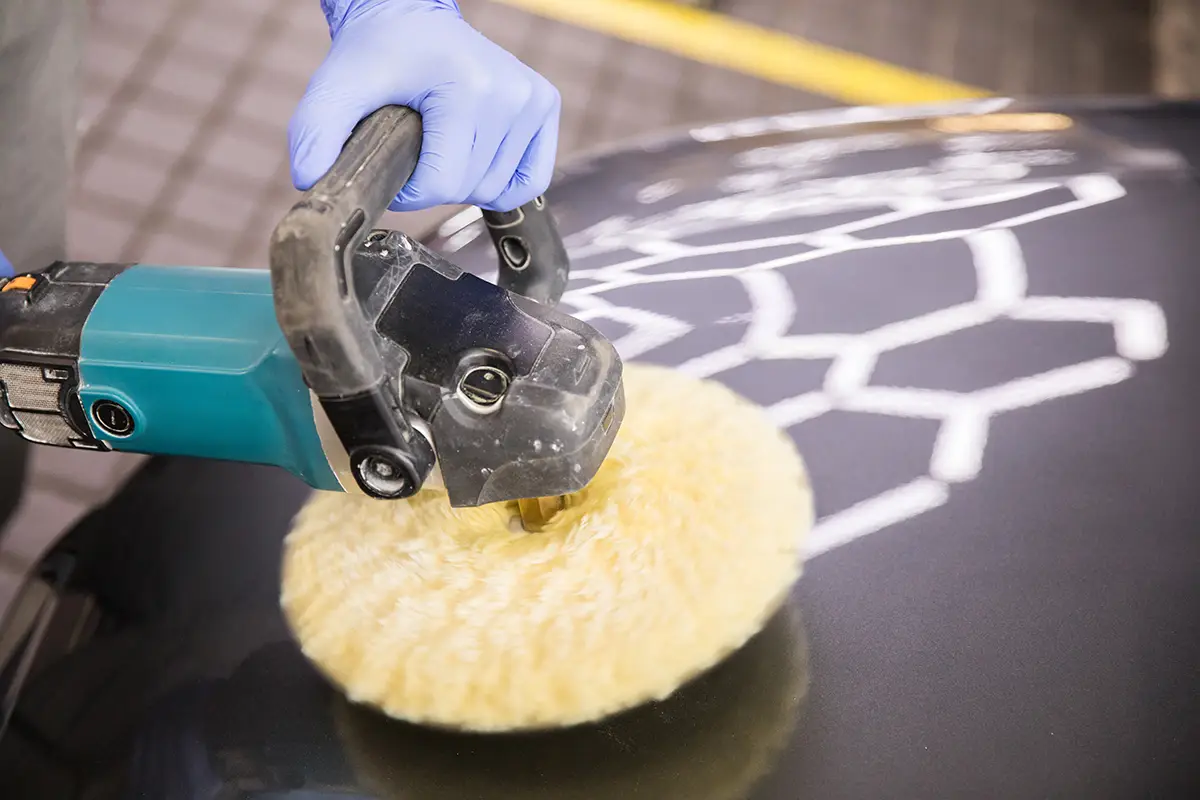
Does the bodywork still look dull after washing? Fine swirl marks, weathered panels and surface haze can take the depth out of a finish. Paint correction goes beyond removing dirt: controlled machine polishing can improve suitable surface defects and bring back a clearer, glossier appearance.
Paint correction
Bring back gloss and clarity. Fine marks catch the light and can make otherwise sound paintwork look tired. On a suitable finish, correction can reduce their appearance and improve the way the surface reflects light. It is particularly worth discussing when a wash leaves the vehicle clean but still lacking the finish you want.
- Improved colour clarity, depth and gloss.
- Sharper reflections with less visible surface haze.
- Reduced appearance of suitable swirls and fine marks.
Weathered surfaces
Treat each material on its own merits. A motorhome may combine painted panels, gelcoat, decals, plastic trim and acrylic windows. Their response to restoration differs. We assess which areas can benefit from polishing, which need a dedicated treatment and which should be left alone, so the plan suits the whole vehicle.
For scratched or hazy windows, read about acrylic window and skylight restoration. It is assessed separately from bodywork polishing.
- A more even-looking finish on suitable surfaces.
- Restoration chosen for paint, gelcoat, trim or acrylic.
- Clear priorities for the areas that will benefit most.
Repair where needed
For new paint rather than polishing, see paintwork, resprays, SMART repairs and rust removal.
Spend on the right solution. Restoration is most valuable when the underlying finish is suitable. Deep damage, peeling finishes and failing graphics can need repair or replacement. Separating these from correctable marks helps you avoid paying for polishing where another approach would serve you better.
- The right remedy for damage polishing cannot fix.
- Less money spent chasing an unsuitable result.
- A clear route from repair to finishing and protection.
Show us the areas that concern you.
Send a whole-side photo, a close-up and a second angle, with your vehicle postcode and make/model. We will explain whether a test area or Christchurch workshop assessment is needed.
Start your three-photo enquiry →
The material, condition and depth of a defect affect what can be improved. We do not promise that polishing will remove every mark.
Your estimate identifies the areas to be treated, preparation, correction work and any finishing protection. Coating is discussed as its own part of the plan.
Restoration priced for your vehicle.
Size & layout
Tell us the make, model and approximate length. Roof fittings, surface area and access affect the work.
Current condition
Routine cleaning, heavy build-up, faded finishes and damage need different time and treatment.
Your priorities
We agree the areas, preparation and treatment included. Several jobs can be planned together.
Workshop or mobile
Your postcode, working space and the job determine suitability. Any travel charge is explained before booking.
UNDERSTAND THE WORK
How a correction plan comes together.
Inspect the surface and set the goal
We look at the material, visible defects and any known repair or coating history. A test area may be needed to judge how the finish responds. That assessment helps set a realistic target: a worthwhile improvement in appearance while respecting the condition of the surface.
Prepare, mask and polish as appropriate
Cleaning and suitable decontamination remove material that should not be worked into the finish. Sensitive edges, trim and graphics need appropriate care during preparation. The pad, polish and number of stages depend on the surface and agreed result; a further refining stage may be needed after initial correction.
Review the improvement and protect it
We review the treated areas and explain any defects that remain. Protection can then be considered for the prepared finish, with the chosen treatment priced and described separately. You leave knowing what has improved and how to care for it, rather than assuming every mark has disappeared.
Not sure what it needs? Start with a conversation.
Tell us your make/model, approximate length, current condition and the areas you want us to focus on. We’ll help you work out the next step.
Not sure whether a mark needs polishing or repair? Use our care guide to plan the next step. Photos help us start the assessment.
